Ceramic vs. Porcelain Tile
Posted by Ben Garelick (@BlueShirtBenny) on 16th Feb 2026
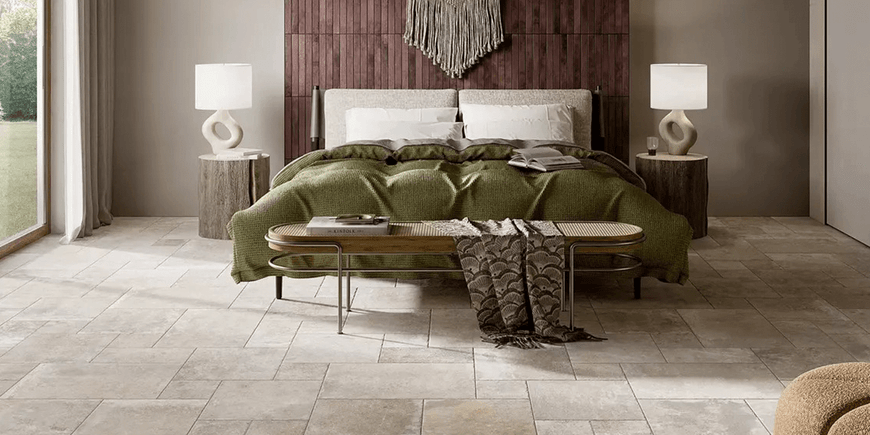
Choosing the right tile for your home can significantly impact both its aesthetic and durability. Ceramic and porcelain tiles are popular choices, offering a blend of beauty and functionality. Despite their similar appearances, they possess distinct characteristics that make each better suited for specific areas of your home.
Understanding these differences is crucial for making an informed decision that aligns with your lifestyle and the demands of your space. This guide aims to clarify the differences and help you confidently select the best option for your renovation project.
Explore the key differences between porcelain vs. ceramic, including their unique advantages and ideal use cases, to help you select the perfect tile for your space.
What Is Ceramic Tile?
Ceramic tile is a clay-based material for flooring and walls. It is made by shaping and drying natural materials such as sand, water and clay. To finish the process, it is placed in a high-temperature kiln to harden and strengthen it. Often finished with a decorative and protective glaze, ceramic tiles are widely recognized for their versatility in design.
Advantages of Ceramic Tile
In the second quarter of 2025, U.S. ceramic tile consumption totaled 1.34 billion square feet, making it a foundational material in many homes. One of the main reasons why ceramic tile is loved is its versatility.
As ceramic tiles come in a wide variety of shapes, cuts, colors and sizes, they cater to most interior types and designs. Whether it's decking out your bedroom with minimalist wall patterns or styling your kitchen with colorful flooring, ceramic tiles are perfect for giving your space a fresh look. Their extensive design options allow for creative expression, easily matching diverse decorative themes from modern minimalist to rustic charm.
Ceramic tiles are also affordable and easy to install, making them a great option for budget-conscious home upgrades.
Considerations for Ceramic Tiles
When choosing ceramic tile, it's important to keep a few factors in mind. Due to their higher water absorption rate and porous nature, ceramic tiles require careful placement. They are prone to moisture retention, which can lead to mold and structural degradation over time, making them less ideal for continually wet areas, like showers, without meticulous maintenance.
Their porosity and susceptibility to freezing and thawing cycles make them less suitable for outdoor installations, particularly in cold climates where cracking or scaling can occur. This limitation means ceramic tiles are best reserved for protected indoor environments where temperature fluctuations and moisture exposure are minimal.
What Is Porcelain Tile?
Porcelain tile is also a clay-based material, but it is made from a finer mixture used for ceramic tiles. It is fired at a higher temperature, which results in a material that is extremely durable and impervious to water. The dense composition gives porcelain a uniform structure, often allowing for consistent color through the entire tile.
Pros of Porcelain Tile
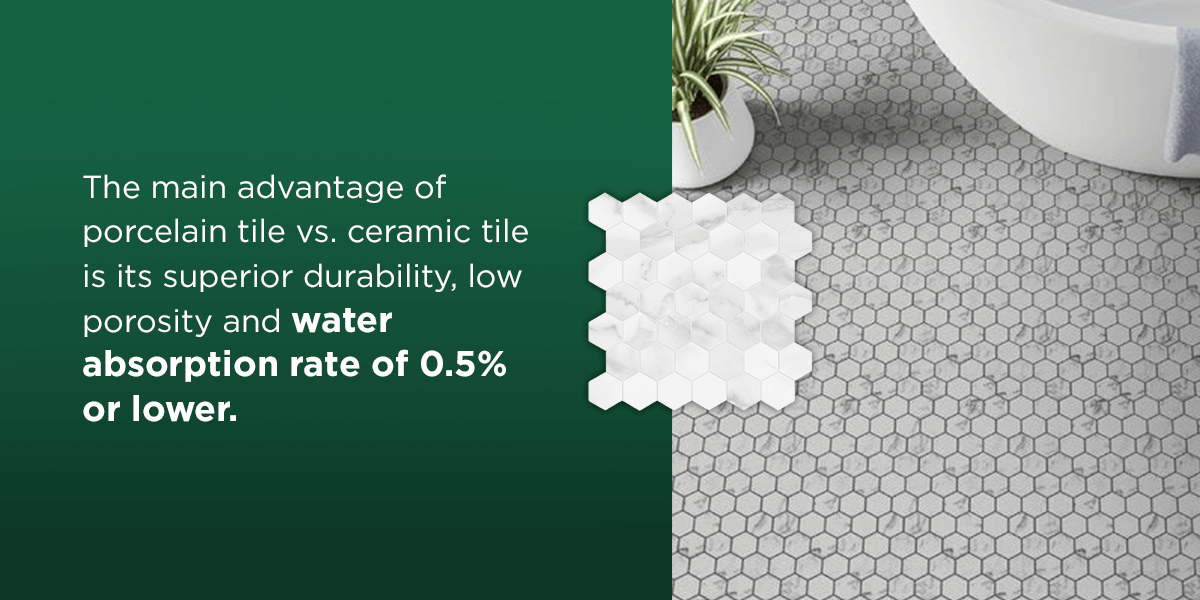
The main advantage of porcelain tile vs. ceramic tile is its superior durability, low porosity and water absorption rate of 0.5% or lower, making it suitable for both indoor and outdoor use. It's also less susceptible to damage and maintenance, even when installed in high-traffic areas. This makes it perfect for styling your outdoor patio with eye-catching colors or your pool area with slip-resistant flooring and a low water absorption rate.
In addition to its durability, porcelain tile is also versatile. From wood and stone to glossy marble and matte concrete, there are endless possibilities for breathing life into your interiors with porcelain tiles.
Considerations for Porcelain Tiles
If you're thinking of using porcelain tiles for your kitchen backsplash or living room flooring, there are a few considerations to keep in mind. Porcelain is generally more expensive than other tile types due to its refined materials and specialized manufacturing process. Additionally, its inherent durability and density make it harder to cut and install, potentially leading to higher labor costs.
Key Differences Between Ceramic and Porcelain Tile
These two options may share many similarities, but there are key differences to be mindful of when shopping for porcelain vs. ceramic floor tile:
- Durability: While ceramic is great for low- to medium-traffic areas and indoor use, porcelain is the stronger tile for most areas, thanks to its premium materials and sophisticated manufacturing process. If you're looking for tiles that require low upkeep and offer excellent durability, porcelain may be the preferred option for your home.
- Flexibility: Porcelain is generally more versatile than ceramic. From high-traffic indoor areas to outdoor pools, porcelain's low porosity and water absorption make it the ideal choice for most applications.
- Appearance: A key method for identifying ceramic vs. porcelain tile is to look at the edges. Ceramic tiles generally have a glazed surface, while porcelain tiles usually have a consistent color throughout their body.
- Cost: Ceramic is typically cheaper than porcelain per square foot and in installation fees. Hence, ceramic tiles are the premier choice for budget-minded individuals looking for an affordable way to refresh their floors or walls.
Key Applications and Use Cases for Both Tile Types
While porcelain tiles offer broad utility, both ceramic and porcelain excel in specific applications tailored to their properties and cost. Ceramic tiles, being a cost-effective option, are an excellent choice for low to medium-traffic indoor areas such as bedrooms, bathrooms, attics and basements. Their lighter weight and ease of cutting also make them ideal for vertical surfaces like kitchen backsplashes and accent walls, where impact and abrasion are minimal.
In contrast, porcelain tiles are better suited for more demanding environments. Due to their superior density and durability, they are perfectly suited for high-traffic areas, including kitchens, living rooms and outdoor patios. With exceptional water resistance and low porosity, porcelain is the preferred material for wet zones, such as shower floors and swimming pools.
Shop the Vast Tile Selection at Carpet & Tile Mart
Are you ready to transform your wall, flooring or backsplash with the perfect tile? With Carpet & Tile Mart, you can feel confident with every tile purchase, from colorful ceramic to striking porcelain tiles.
Make your home your own with Carpet & Tile Mart's well-priced ceramic and porcelain tiles. Our intuitive floor visualizing tool makes it easy to picture how ceramic or porcelain would look in your rooms. We also offer a floor and measuring fitting service to help you calculate the exact number of tiles you need and get an accurate quote.
Shop tiles for walls and floors online or visit our stores in Delaware, Pennsylvania and South Jersey to get a feel of the tiles in person. We offer a 2-year installation warranty, and we can often install flooring within a week of your purchase.