How to Layer Rugs: A Stylish, Practical Guide for Any Space
Posted by Ben Garelick (@BlueShirtBenny) on 2nd Feb 2026

Layering rugs is a simple way to add personality, warmth and depth to a room. Instead of relying on a single rug to make a statement, layering allows you to mix textures, patterns and sizes for a more inviting, designer-like appearance. No matter if your style is cozy, modern or eclectic, layering rugs allows you to refresh a space without a complete overhaul.
Discover what rug layering is, why it works and how to do it step-by-step.
What Is Rug Layering?
Rug layering means placing one rug on top of another to create contrast and visual appeal. Usually, a larger neutral rug serves as the foundation, while a smaller accent rug adds color, texture or pattern.
This design method works in various spaces, such as bedrooms, living rooms, home offices and dining areas. When done carefully, rug layering can help define areas in open floor plans, make surfaces more comfortable and enhance the overall appearance of a room.
Why Layer Rugs?
There's a reason rug layering continues to show up in design magazines and everyday homes alike. It's practical, flexible and creates visual interest.
Some of the reasons homeowners often choose to layer rugs include:
- Adding depth and texture to a room.
- Softening hard flooring surfaces.
- Highlighting a smaller or decorative rug.
- Making large areas feel more purposeful.
- Defining seating or dining areas in open layouts.
Layering also gives you more options. For instance, you can change just one of the layers and give the space a fresh look.
How to Layer Rugs in 4 Easy Steps
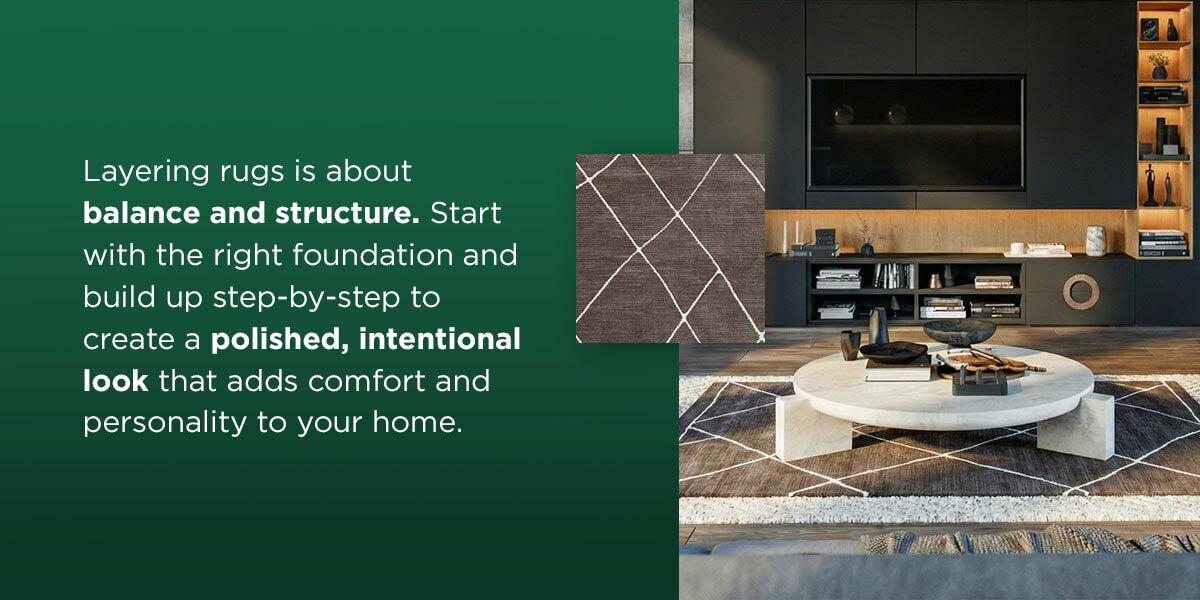
Layering rugs is not just a design trend. It also adds comfort, structure and personality to a space. Many rooms serve multiple purposes, and rug layering helps organize areas visually without making permanent changes. When done thoughtfully, it creates a polished, intentional look instead of feeling accidental or cluttered.
If you’re new to rug layering, having a clear structure makes the process easier. Start with the right foundation and build up step by step. This approach allows you to experiment while still keeping balance.
Step 1: Start With a Base Rug
The base rug anchors the entire space, so rug size and material are important considerations. This rug should be large enough to support the furniture and define the area you're working with. In living rooms, this often means a rug that fits under the front legs of sofas and chairs. In bedrooms, it usually extends beneath the bed.
Neutral colors and subtle textures are best for base rugs. Flatweave rugs, low-pile styles or natural fiber rugs, such as jute or sisal, create a solid foundation without drawing too much attention. These materials also help prevent the top rug from shifting and make the layered look feel cohesive rather than chaotic.
Choosing the right base rug sets the tone for the entire design and makes it easier to incorporate bolder accents on top.
Step 2: Add a Smaller Accent Rug
The accent rug is where personality shines. This top layer should be noticeably smaller than the base rug so the bottom layer frames it clearly. Accent rugs are great for adding color, pattern or a softer texture that creates visual interest.
This is where layering area rugs really stands out. Patterned rugs, vintage designs or plush textures work well as the top layer. The key is contrast. If your base rug is neutral and flat, the accent rug can be bold or textured without overwhelming the space.
Keeping the accent rug smaller ensures the layered look feels intentional and balanced, not crowded.
Step 3: Pay Attention to Placement
Placement is what distinguishes a well-layered rug setup from one that feels off-center or accidental. The accent rug should be positioned to highlight the room’s focal point.
In living rooms, this often means centering the top rug beneath the coffee table or within the seating area, while keeping all major furniture legs on the base rug. In bedrooms, the accent rug may sit under the lower half of the bed, adding warmth where your feet touch the floor.
A good rule of thumb is to let the base rug define the space, while the top rug draws attention to the area you want to highlight.
Step 4: Mix Textures, Not Chaos
Layering works best with contrast, but avoid clutter. Pair smooth with textured or simple with patterned to keep the look balanced.
Successful rug layering depends on contrast, but it’s important to avoid visual overload. Mixing textures tends to work better than mixing too many patterns. For example, pairing a smooth flatweave base with a patterned or plush accent rug adds depth without clashing.
If you’re using patterns, keep one rug subtle and let the other make a statement. Keeping a consistent color palette between both rugs also helps unify the look. The goal is balanced — layered rugs should feel collected and cohesive, not busy or overwhelming.
Common Rug Layering Mistakes to Avoid
Though there are no set-in-stone rules regarding rug layering, there are common pitfalls to avoid. These include:
- Using rugs that are too similar in size.
- Overlapping busy patterns without contrast.
- Choosing slippery rugs without proper grip.
- Ignoring room size and furniture layout.
Steering clear of these mistakes helps ensure your layered rugs look intentional and polished.
Frequently Asked Questions About Rug Layering
The following are commonly asked questions and answers about layering rugs.
Are People Still Layering Rugs?
Yes, layering rugs remains a popular design choice because it combines function and style. Designers and homeowners appreciate its versatility, especially in multipurpose or open-concept spaces. Layering allows you to update your decor over time while making the most of the rugs you already own.
How Do You Layer Rugs Boho Style?
Layering rugs is a versatile feature that works across many design styles, which is why it remains a popular choice in modern interiors. Boho-inspired spaces are ideal for layering rugs. This style emphasizes texture, global patterns, and casual design choices.
To achieve a boho look:
- Mix patterned rugs with natural fiber bases.
- Use warm tones and earthy colors.
- Embrace slight asymmetry for a relaxed feel.
Layering rugs this way adds character and gives the space a collected look rather than an overly styled feel. For a more streamlined space, opt for subtle contrasts. For instance, a low-pile base rug paired with a softly textured top rug keeps the look polished without feeling flat.
What Are the Best Practices for Layering Rugs in a Living Room?
Living rooms are popular for experimenting with layering. A large base rug helps anchor furniture, while a smaller rug on top can accentuate the seating area or coffee table.
For a cohesive look:
- Keep furniture legs on the bottom rug.
- Use the top rug to add color or pattern.
- Ensure both rugs match the room’s colors.
This approach helps define the space while maintaining a warm and welcoming atmosphere. Homeowners looking to layer rugs like a pro focus on balance.
Explore Rugs for Layering at Carpet & Tile Mart
With a huge selection of area rugs and knowledgeable staff, Carpet & Tile Mart makes it easy to bring your rug layering ideas to life. You can browse different styles online or visit one of 14 store locations in Delaware, Pennsylvania and South Jersey to see rugs up close.
Area rugs ship free, and in-store teams are always available to help you find combinations that work beautifully together. Whether you’re trying your first layered look or refining an existing space, Carpet & Tile Mart offers the service, value and confidence needed to make the process simple.
Explore area rugs online or visit a Carpet & Tile Mart store near you to start layering.