Best Flooring for Bathrooms
Posted by Ben Garelick (@BlueShirtBenny) on 28th Oct 2024

Summary: Durable, easy-to-maintain, and water- and slip-resistant floors are the best for bathrooms because they offer safety and longevity. Avoid bathroom flooring materials that are susceptible to mold and moisture damage.
- Water resistance, slip resistance, durability and ease of maintenance help increase safety and longevity from foot traffic and reduce mold growth common in high-moisture areas.
- Porcelain or ceramic tile, waterproof vinyl plank flooring, concrete and natural stone are ideal bathroom floor options thanks to their resistance to water-related issues.
- Carpet and hardwood options aren't ideal for bathrooms as they are more susceptible to water damage, mold and mildew growth.
Choosing the right flooring for your bathrooms is an exciting home project. The right flooring helps tie the space together, adds to its aesthetic appeal and improves its overall functionality.
Things to consider when shopping for the best bathroom flooring include the style you want to achieve, the flooring's water and slip-resistant properties and the durability and longevity of the material you choose. With these factors in mind, you can create a bathroom with safer, luxury flooring at an affordable price.
Features to Consider for Your Bathroom Floors
Bathroom flooring has specific features that are vital to consider before purchasing. Follow these easy tips for selecting the right flooring for your bathrooms:
- Water-resistant: Unlike the rest of your home, bathroom floors tend to get wet — and often! The flooring in bathrooms should be water-resistant to prevent mildew, mold and other issues associated with high moisture exposure.
- Slip-resistant: Bathroom floors should provide a good level of traction to minimize the risk of slips and falls on a wet surface.
- Durable: Bathrooms are high-traffic areas, so the flooring you choose should be durable enough to withstand the wear and tear of heavy use. Choosing durable materials also ensures that your flooring lasts and that you save on the costs of frequent repairs and replacements.
- Easy to maintain: Since bathrooms are busy areas with high moisture, the flooring will require frequent cleaning. Choosing an option that is easy to clean and maintain will help you save time and effort.
- Visually appealing:Remember to choose a flooring option that catches your eye! The bathroom is an important part of the home, and you should be able to create a space that matches your style and preferences.
The Best Bathroom Flooring Options
Whether you want to prioritize functionality, durability, style or cost, there are several excellent flooring options for bathrooms to choose from:
Porcelain or Ceramic Tile
Ceramic tiles — including porcelain — are the most popular choices for bathroom flooring, and with good reason:
- Ceramic is durable, resistant to scratches and long-lasting.
- The tile is water-resistant, holding up well to dampness and steam.
- Ceramics and porcelain are mold-resistant.
- These tiles are easy to clean and maintain.
- Ceramic is an eco-friendly, sustainable material.
Porcelain is harder than other types of ceramic, making it more durable and water-resistant. The only potential drawback of choosing porcelain over other ceramic tiles is that it does cost more. Thankfully, there are also beautiful porcelain tile options available at different prices, including cost-effective Modern Hearth White Ash Porcelain Tiles and luxury London Brick Fog Porcelain Floor Tiles.
Waterproof Vinyl
Vinyl flooring is a versatile option that suits bathrooms well. Vinyl is a resilient material that is also moisture-resistant, easy to install and maintain and affordable. It comes in various designs and colors, so you can create a unique bathroom space at a fraction of the cost of other custom options. If you opt for vinyl flooring, you have the choice of luxury vinyl tiles (LVT), vinyl sheeting or luxury vinyl tiles.
Concrete Flooring
Concrete flooring is water-resistant, long-lasting and relatively easy to maintain. Concrete is a good choice for industrial styles, but you can also customize it with various finishes and colors to suit your specific aesthetic. It is a great option for bathroom flooring since it is also eco-friendly, sustainable and cost-effective.
Natural Stone
Though polished natural stone suits modern bathrooms well, its earthy and weathered look makes it a wonderful choice for creating a warm, rustic space. The eye-catching Roman Travertine Pattern White Floor Tile with cream and white tones is an ideal option for flooring anywhere around the home.
Natural stone is water and moisture-resistant and easy to clean, making it well-suited for bathroom flooring applications. It is also a durable option for a high-traffic area like the bathroom — though it can stain easily, chip or scratch if you do not maintain it properly.

Flooring Types to Avoid in a Bathroom
Some flooring options are excellent choices for other areas around your home, but for a bathroom, they would be a poor choice. Flooring types you should leave out of your bathroom's design include the following:
Carpet
While it makes sense not to have carpet in the bathroom, it is quite common. Carpet is typically made using fibers that absorb moisture, and a bathroom is a space where water can easily get on the floor from showering or bathing, brushing teeth or even an overflowing toilet.
The naturally moist environment of a bathroom means that carpets quickly cause unhygienic, unsightly mold and mildew to form. A damp carpet can also cause issues with the flooring underneath it by creating damp, moldy spots.
Hardwood Floors
Like carpet, hardwood is not suited to bathrooms because of the high moisture environment. Hardwood flooring is a porous material, and any water that gets on or under the flooring can damage the wood by causing it to swell and warp. Extensive water damage to the hardwood floors can also cause mold to grow.
Linoleum
It may be surprising to learn that linoleum flooring is not a great option for bathrooms, especially since it is durable and long-lasting. Although linoleum is a water-resistant material, it is not waterproof and has seams that water can seep through. The moisture in bathrooms can cause it to contract and expand. Many manufacturers do not recommend installing linoleum in your bathroom, and doing so can void your warranty.
Glass Tile
Glass tile is waterproof and creates a beautiful, clean look — making it a tempting choice for your bathroom. Despite how beautiful it looks and its excellent waterproof qualities, it is definitely not worth the risk of how slippery glass tile would be in a wet environment like the bathroom. Glass tile can perform well on walls, though.
Frequently Asked Questions About Bathroom Flooring
Here are some answers to help you find flooring that lasts long, looks good and helps keep your bathroom clean and safe.
What is the most durable waterproof flooring for a bathroom?
Porcelain tile is often considered the most durable waterproof flooring for a bathroom because it's scratch- and dent-resistant and extremely tough. These tiles are also ideal for high-moisture environments, as they absorb 0.5% or less water. The next best option is LVP. This vinyl is 100% waterproof and highly durable in areas with high amounts of moisture and foot traffic.
Is luxury vinyl plank good for bathroom floors?
Luxury vinyl plank is good for bathroom floors because it's 100% waterproof and designed to handle everyday wear and tear. Our LVP products have a waterproof core that prevents warping, swelling and cracking, while their textured surface and slip-resistant layer provide better grip for wet feet. LVP is easier to install because it uses a click-lock system and doesn't require sealing or refinishing. It also provides more warmth and comfort compared to tile or stone.
What is the safest bathroom flooring for preventing slips?
Textured porcelain and LVP are the safest bathroom flooring options for preventing slips. Texture is key to providing grip in wet environments. LVP is designed with texturing and a slip-resistant layer, while porcelain comes in textured or matte options to increase grip.
What bathroom flooring is easiest to clean and maintain?
Sheet vinyl, LVP and porcelain and ceramic tiles are the easiest bathroom flooring options to clean and maintain. These flooring options are typically smooth, making them easy to wipe down with regular household cleaners. While tiles have grout lines that require more maintenance to prevent staining and mold growth, LVP and vinyl sheets have fewer seams for moisture or dirt to gather or seep through.
Opt for a bathroom floor that's darker than the walls rather than a lighter option. It's easier to keep it looking clean because the darker floor hides daily grime better. LVP bathroom flooring doesn't take long to install, thanks to its click-lock system and ability to be easily floated onto existing flooring.
Shop at Carpet & Tile Mart for High-Quality Carpets
Quality bathroom flooring is an investment that adds to your home's style and value. Choosing water-resistant, long-lasting flooring options will help ensure your bathroom's functionality and create a pristine space that is easy to maintain.
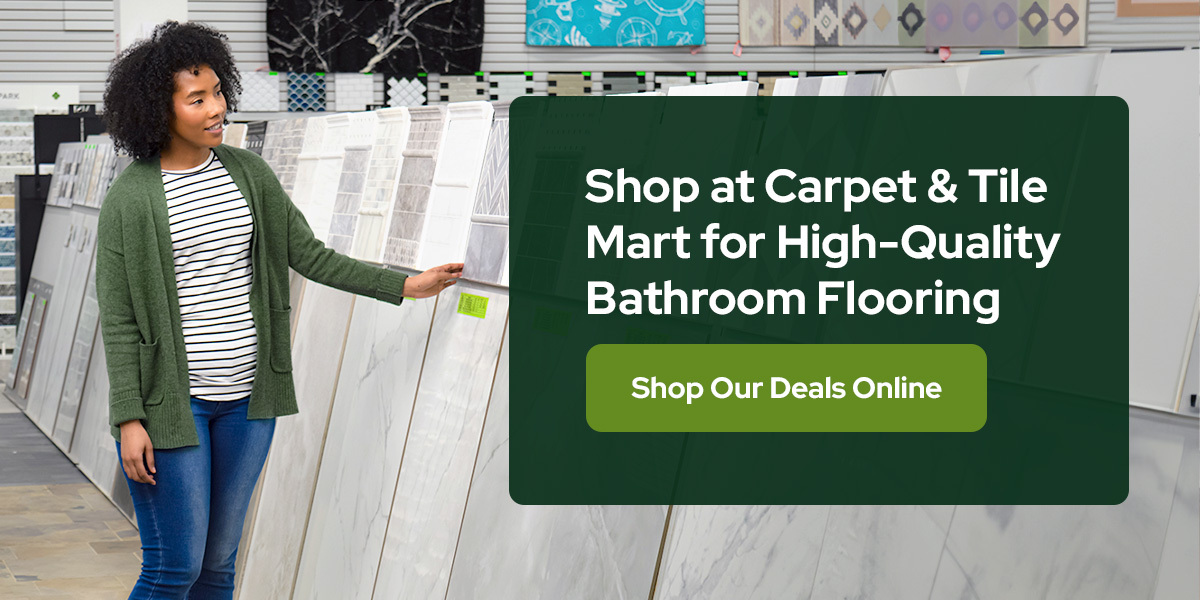
Are you ready to choose your bathroom flooring and embark on your next home project? Get quality floors for your bathroom at Carpet & Tile Mart. We have a range of affordable and quality products, including the best flooring for bathrooms.
Our extensive collection of flooring options includes ceramic and porcelain tiles and a wide range of vinyl flooring. Additionally, we have a variety of carpets and rugs to suit other areas in your home.
Shop our deals online to find your ideal bathroom flooring solutions, or visit one of our Carpet & Tile Mart stores near you for high-quality bathroom flooring options at competitive prices!