Best Eco-Friendly and Sustainable Flooring Options
Posted by Ben Garelick (@BlueShirtBenny) on 30th Dec 2025

There are many reasons you might be looking to make sustainable improvements to your home. Investing in eco-friendly flooring can contribute positively to our precious environment, lower your carbon footprint and save you money by increasing the longevity of your floors and enhancing the future value of your property.
Green building materials are in increasingly high demand, providing homeowners today with numerous high-quality options to choose from. This comprehensive guide explores the best eco-friendly flooring options, investigating what makes them sustainable and some key benefits and considerations.
What Constitutes Sustainable Flooring?
There are a few aspects to consider when comparing the most environmentally friendly flooring types, and it's important to understand what to look for. Some of the factors that contribute to a floor material being sustainable are:
- The use of sustainable materials: The most eco-friendly flooring materials include those that can be efficiently produced, easily renewed and locally sourced. For example, a wood that takes a few years to reach maturity is more easily renewable than one that takes decades to grow before it can be used.
- Durability: The higher a material's lifespan, the less waste it creates, the lower production levels it requires, and therefore the less energy it requires to make it.
- Recyclability: The easier a flooring material is to recycle, the better it is for the environment. Recyclable materials reduce the need for extracting materials from their source, help conserve natural resources and reduce greenhouse gas emissions.
- No VOCs: Volatile organic compounds (VOCs) are chemicals that evaporate at room temperature. They are often applied to flooring materials and, once installed, can compromise air quality and pose threats to both the environment and human health.
- Certifications: Many eco-friendly materials have certifications that verify their sustainability. For example, you can trust that wood approved by the Forest Stewardship Council (FSC) has been sourced from sustainably managed forests.

Types of Sustainable Flooring
While sustainability is a lofty and worthy goal, it's also important that the flooring you choose is durable, easy to maintain and matches the aesthetics of your space. Consider the following types of eco-friendly flooring options for your next home project:
Bamboo
Bamboo has been used in construction for centuries, and today, it is lauded as one of the most sustainable flooring options. The environmental benefits of bamboo flooring include:
- Rapid renewability: Depending on the species, bamboo can grow to full maturity for use as a viable flooring option within three to five years. This makes bamboo a highly renewable source compared to more traditional hardwood, which can require decades to become usable.
- Limited deforestation: As bamboo can be harvested without killing the plant, using bamboo does not contribute to deforestation or cause as much destruction as the harvesting of traditional woods.
- Efficient production: The cultivation of bamboo requires minimal resources, such as pesticides, fertilizer and water, making it an efficient material to produce.
- Secondary benefits: Aside from creating an environmentally friendly flooring option, bamboo forests can create ideal habitats for various animal and plant species, while also contributing to the area's soil stabilization.
Alongside being one of the best eco-friendly flooring materials, bamboo flooring also has an array of other benefits:
- Low cost: Bamboo flooring is generally more affordable than traditional hardwood and exotic wood species.
- Variety: Available in a range of colors and finishes, bamboo flooring can be tailored to your style preferences.
- Maintenance: Bamboo floors are generally easy to clean and care for.
Wool Carpets and Rugs
Wool is a natural fiber material that comes from animal fleeces — most commonly, sheep. The qualities that make wool a sustainable flooring option:
- Renewability: As it is naturally derived from animals, which regrow their fleece after shearing, wool is a continuously renewable resource.
- Biodegradability: Wool is a 100% natural protein fiber, which means it can decompose naturally and provides beneficial nutrients, such as nitrogen and sulfur, that enrich the soil.
- Energy efficiency: Because wool is a natural insulator, once installed, wool carpets and rugs can help buildings retain heat and therefore reduce energy consumption, which can lower your carbon footprint and reduce your heating bills.
- Recyclable: Wool is a fully recyclable material and, once recycled, can be repurposed.
Wool rugs and carpets also provide additional benefits to your home:
- Aesthetic: Wool flooring has a luxurious appearance and timeless appeal, and it is available in a range of colors to suit your preferences.
- Safety: Wool is naturally flame-resistant and less slippery than many hard flooring options. It also provides a softer cushion, should you slip or fall.
Porcelain Tiles
Porcelain tiles have been in use for centuries. Today, they remain as advantageous as ever and are considered an extremely environmentally friendly flooring material. A few reasons porcelain tiles are a great sustainable flooring option are:
- Durability: One of the primary advantages of porcelain flooring is its exceptional longevity. It can last decades and therefore creates minimal waste, requires few replacements and has lower production levels than other less durable flooring materials.
- Natural material composition: Many types of porcelain are made entirely from natural minerals and clay, making it a widely available and renewable resource with a low carbon footprint.
- Recycled content: Many modern porcelain tile manufacturers incorporate recycled materials into their tiles, such as recycled glass, which diverts high levels of waste from landfills.
As well as being one of the most eco-friendly flooring options, porcelain tiles are also:
- Low maintenance: Porcelain tiles require minimal cleaning and are highly resistant to moisture, stains and scratches.
- Suitable for high-traffic: Their strength and damage resistance make porcelain tiles great for use in your home's busiest areas.
Engineered Hardwood
Engineered hardwood has all the aesthetic benefits of traditional hardwood, with an even more favorable environmental impact. Here's why engineered hardwood floors are great for our planet:
- Fewer trees are required: Since engineered hardwood floors only use a thin layer or veneer of hardwood, combined with layers of plywood or fiberboard, they contribute to lower levels of deforestation than solid hardwood floors.
- Durability: Plywood and fiberwood are more resistant to moisture, expansion and contraction than traditional wood, meaning engineered hardwood floors can last much longer than regular wood flooring options.
- Use of recycled materials: Many manufacturers incorporate wood waste products, such as wood chips and sawdust, into the underlayers of engineered hardwood, helping to maximise resources and minimize waste.
Additional benefits of engineered hardwood flooring include:
- Affordability: As engineered wood floors only require a thin layer of solid hardwood, they are generally much more affordable than traditional wood flooring options.
- Maintenance: Engineered hardwood floors are easy to clean and care for and require minimal upkeep.
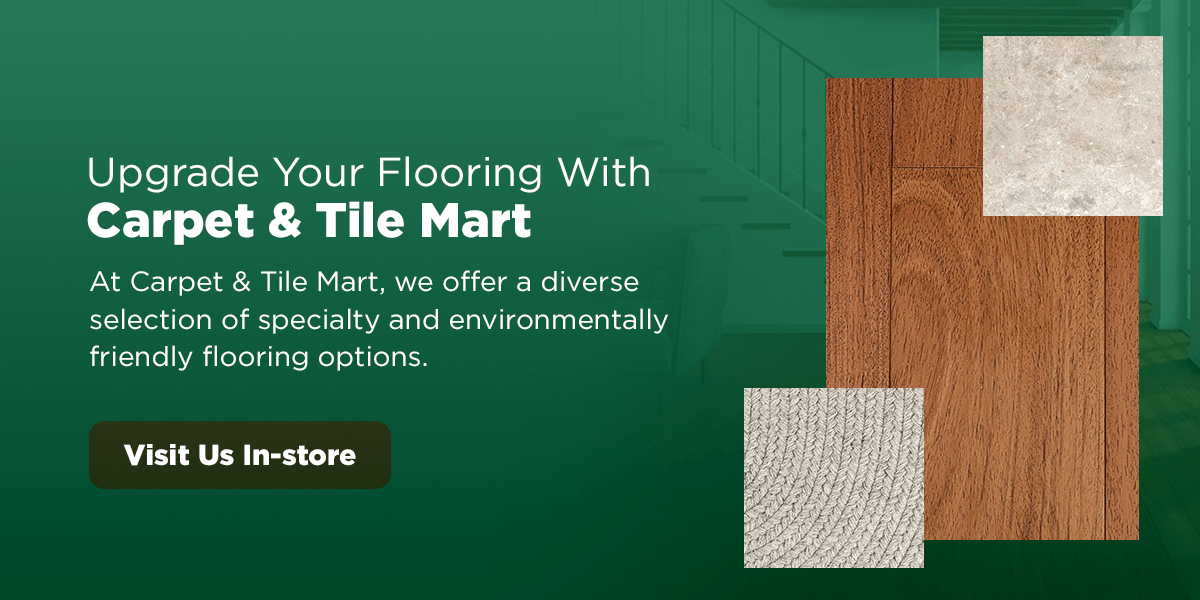
Upgrade Your Flooring with Carpet & Tile Mart
At Carpet & Tile Mart, we offer a diverse selection of specialty and environmentally friendly flooring options. With thousands of in-stock products both in-store and online across all our categories, we’ll always have your top flooring choices on hand and ready to take home.
Visit your nearest Carpet & Tile Mart or schedule your in-home measurement today.