What's the Best Carpet Padding? A Complete Buying Guide
Posted by Ben Garelick (@BlueShirtBenny) on 13th Oct 2026
Shopping for carpet padding can turn overwhelming fast, especially once the specs come into play. Pound ratings and thickness measurements in fractions of an inch look like small details, but they can have a big impact on how comfortable your floor feels and how long your carpet lasts.
This guide sorts through that confusion with a clear framework based on your room, carpet type and warranty requirements, so you'll walk into any showroom already knowing what to ask for.
Key Factors in Carpet Padding Performance
Carpet padding, sometimes called carpet underlay, is often compared by density and thickness, two specs that shape overall performance.
Carpet Pad Density
Density measures the amount of material packed into each cubic foot of pad, expressed in pounds per cubic foot, and it often has a greater influence on carpet performance than thickness alone. A low-density pad might feel soft in the showroom, but under regular foot traffic, it may compress and develop flat spots in traffic lanes, potentially shortening your carpet's lifespan.
As a general rule, many residential carpets are often paired with padding of at least 6 pounds per cubic foot, though some carpet types and high-traffic areas may require a denser pad. You can often find density information on the packaging, product label or product spec sheet, but a flooring expert can help confirm it if the number isn't easy to spot.
Choosing a high-density carpet pad for busy rooms usually does more to support long-term performance than adding extra thickness.
Carpet Pad Thickness
Carpet pad thickness is how tall the pad stands. This number is typically expressed as a fraction of an inch rather than a whole number. It's the number most shoppers focus on first, but it's also where the biggest mistakes can happen.
Many manufacturers set thickness limits based on how much flex a carpet backing can handle before it starts to
fail. If your padding is too thick, it can create a gap that the carpet has to bridge with every step, and that
repeated flexing may contribute to backing breakdown over time. Because this threshold varies by carpet construction,
your safest bet is to check your specific carpet's padding thickness requirements before you buy.
Common Types of Carpet Padding

Each type of carpet pad has its own strengths, and knowing them helps you shop with a clear plan instead of picking based on price alone.
1. Rebond or Bonded Foam Padding
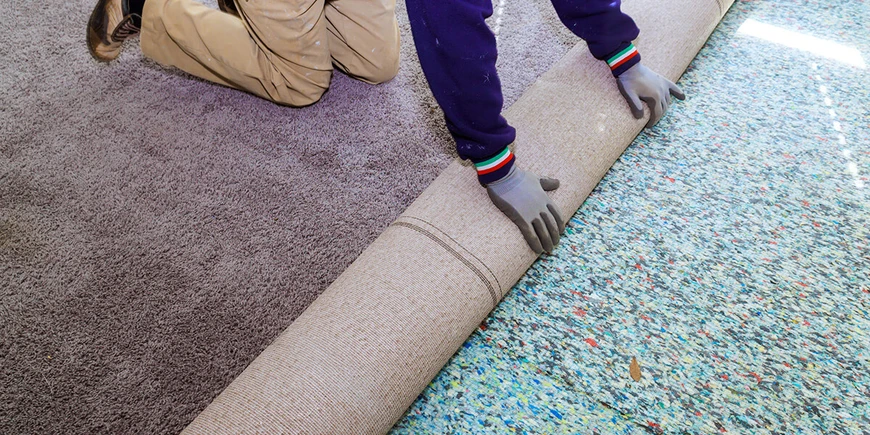
Bonded foam padding, more commonly called rebond, is made by grinding up scrap polyurethane foam and pressing it back together into a solid sheet, which is why it often looks speckled with different colors. It typically comes in a broad density range from 4 pounds to 10 pounds per cubic foot.
A rebond pad may be a good fit for many residential rooms, but busier spaces typically require a denser option for better long-term support. Since it's made primarily from recycled foam, it's a popular value-focused option for many residential carpet projects.
2. Memory Foam Padding
Also known as viscoelastic foam, memory foam padding uses the same technology found in premium mattresses. It cushions each step and gradually rebounds, giving the carpet a soft, plush feel underfoot. Under heavy foot traffic, it can compress over time, and its seams can tear if heavy furniture gets dragged across it. Viscoelastic foam often has a lower density range than some firmer padding types, which is one reason it's often better suited to comfort-focused, lower-traffic rooms.
3. Synthetic Fiber Padding
Synthetic fiber padding is created using recycled fibers, including nylon, polyester and polypropylene, compressed under pressure into a dense, felt-like sheet. Compared with foam pads, it typically feels firmer and flatter underfoot.
This firmness matters most under loop-pile and Berber carpets, where carpet construction determines pad choice more than personal preference does. When padding is too soft or thick, loop-pile carpet may flex more than it should, which can contribute to stretching, distortion or premature wear.
What to Consider When Choosing Padding
The following factors can help narrow down the right padding for your space:
-
Moisture exposure: If you’re installing carpet or padding over a concrete slab in a basement or below-grade room, you may need carpet padding with a moisture barrier to help guard against minor subfloor moisture.
-
Foot traffic: Busy spaces like living rooms, family rooms and hallways generally call for a denser pad, while bedrooms and other lighter-use rooms offer more flexibility.
-
Carpet type: Loop-pile and Berber carpets typically need a firm, thin pad to help keep their loops from stretching or distorting. Cut-pile carpet, on the other hand, can handle a wider range of options.
- Comfort priorities: If a plush, cushioned feel matters more than heavy-duty durability, a comfort-focused option can be worth the trade-off in lower-traffic rooms.
Frequently Asked Questions About Carpet Padding
We've answered a few questions that come up often when homeowners compare carpet padding options.
What are the benefits of choosing a high-density carpet pad?
A higher-density pad generally resists compression better, helping your carpet maintain its appearance in busy rooms and reducing the risk of flat spots along common walkways. It can also support your carpet's warranty requirements, depending on the manufacturer.
Is thickness or density more important for carpet padding?
Density generally plays the bigger role in how well your carpet performs over time, since it affects how much wear and compression the pad can handle.
What is carpet padding made of?
Most carpet padding is made from bonded polyurethane foam, memory foam or synthetic fiber. Because many residential carpet pads use recycled materials, padding can appeal to shoppers who value recycled-content products.
What type of carpet padding lasts the longest?
Synthetic fiber padding tends to have a long lifespan under typical conditions. At the same time, high-density rebond can also offer years of reliable performance when matched to the right carpet and room.
Find Your Best Carpet Padding at Carpet & Tile Mart
The right padding can help your carpet perform as intended, from meeting warranty requirements to giving you more confidence in your flooring choice, and that's exactly where Carpet & Tile Mart comes in. With the largest in-stock selection on the East Coast and decades of hands-on experience, our showrooms make it easy to compare options, feel the difference and get expert guidance in one visit.
Visit a showroom near you to experience our full range of options firsthand, and shop with confidence knowing our in-store 150% price-match guarantee applies to qualifying identical items. Once you've made your choice, we can often install your new flooring within a week. Find your nearest Carpet & Tile Mart showroom to explore padding options in person, or reach out through our online contact form.