What Flooring Types Are the Easiest to Install?
Posted by Ben Garelick (@BlueShirtBenny) on 16th Apr 2026

Upgrading your floors may sound intimidating and expensive, but simpler installation can significantly reduce labor costs, whether you do the work yourself or hire a professional. While many installers charge per square foot, some price by the hour based on complexity — so choosing easy-to-install materials equals a more affordable, efficient project.
Unfortunately, not all flooring offers the same DIY-accessible experience, as some products require specialized tools or advanced techniques that can slow down even the handiest homeowners. The standouts in the beginner-friendly category are luxury vinyl plank, luxury vinyl tile, laminate and carpet tiles — all designed with features that remove much of the complexity.
Luxury Vinyl Plank and Luxury Vinyl Tile
If you're looking for flooring that combines durability with DIY-friendliness, luxury vinyl flooring delivers on both fronts. LVP and LVT have become go-to choices for homeowners who want the look of hardwood or stone without the complexity or cost of traditional materials. These products are generally more durable than hardwood and offer impressive scratch resistance, making them ideal for busy households — especially if you have furry friends running around.
Why LVP and LVT Are Easy to Install
Vinyl flooring is straightforward to install due to several features that eliminate typical installation headaches.
-
Floating installation: Thanks to the click-lock system used in most floating luxury vinyl floors, planks or tiles snap together without glue or nails. This "floating" installation method lets the floor rest on top of your subfloor, without committing to permanent adhesive or wrestling with tricky fasteners.
-
Glue-down installation: If you prefer a more permanent feel, glue-down luxury vinyl flooring is also easy to install. Spread adhesive and press planks into place, giving you control over positioning without nailing or stapling.
-
Waterproof: Most modern LVP and LVT products are waterproof from the top down, making them more forgiving than hardwood planks, especially for beginners who might worry about spills during installation.
-
Flexible: Flexible vinyl flooring cuts easily with a utility knife and straightedge, so you won't need expensive saws to cut your planks to size.
Quick Tips for Installing LVP and LVT
Follow these best practices to ensure your vinyl flooring installation goes smoothly.
-
Acclimate the flooring: Unless you buy planks or tiles specifically labeled as install-ready, let them sit in the room for 24 hours to adjust to the temperature and humidity.
-
Prep your subfloor: Clean the surface thoroughly and check for level issues, as LVP and LVT need a flat, stable surface. Use floor patch or leveling compound to fill dips or low spots that could cause your planks to flex or separate.
-
Mix boxes: Blend planks from multiple boxes to create a uniform appearance and avoid noticeable color variations from different dye lots.
-
Start in a corner: Begin your installation in a corner of the room with the tongue side of the plank facing the wall to make it easier to click subsequent rows into place.
-
Undercut door frames: Trim the bottom of door casings so planks can slide underneath for seamless transitions between rooms.
Laminate Flooring
Laminate has earned its reputation as a budget-friendly alternative to hardwood floors that doesn't sacrifice style or ease of installation. If you love the warmth of wood but want a more forgiving installation process, laminate flooring delivers impressive results at a fraction of the cost.
Why Laminate Flooring Is Easy to Install
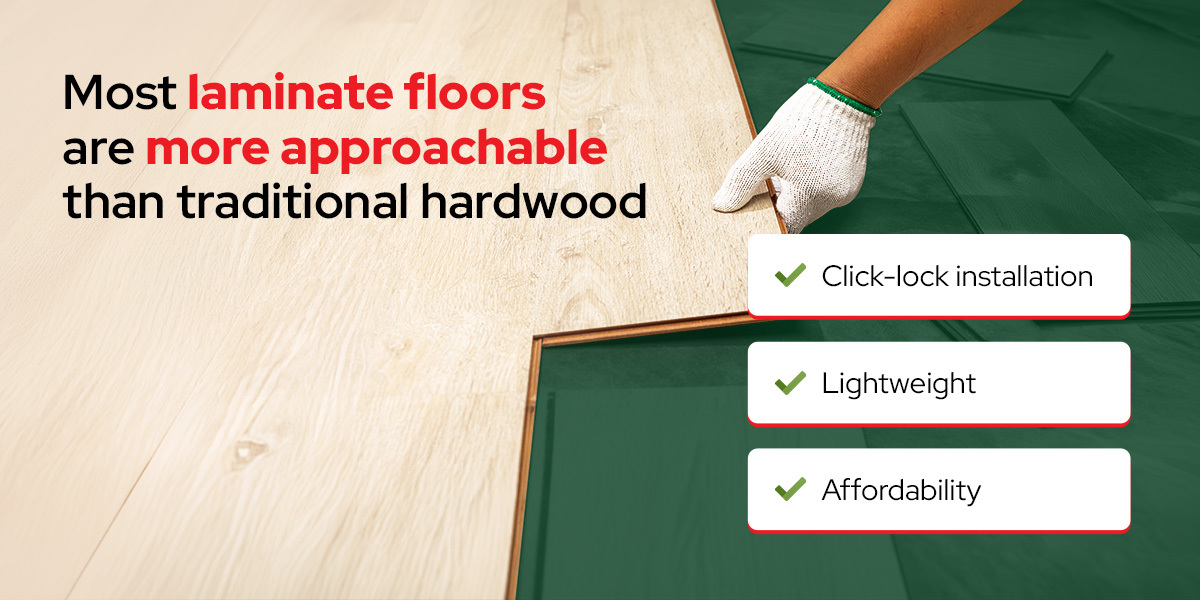
Most laminate floors are more approachable than traditional hardwood, which often requires specialized tools and professional techniques.
-
Click-lock installation: Look for products with floating, click-lock tongue-and-groove systems that eliminate the need for glue or nails. These interlocking planks snap together with satisfying precision, and there's no curing time — you can walk on your new floor immediately after installation.
-
Lightweight: Laminate is lightweight and generally easier to handle than solid hardwood, making maneuvering planks and carrying boxes significantly less physically demanding.
-
Affordability: Price is a significant advantage. While hardwood averages $5 to over $12 per square foot, laminate averages just $0.89 to $5, which means you'll save on materials and labor if you choose to install it yourself.
Quick Tips for Installing Laminate Flooring
Set yourself up for success with these laminate installation best practices.
-
Acclimate planks: Let your laminate sit in the installation room for 48 hours before you begin to prevent buckling caused by temperature or humidity shifts.
-
Level your subfloor: While the subfloor doesn't need to be perfectly level, you'll want less than a quarter-inch of unevenness across a 10-foot span. Check for high and low spots and address them before putting down planks.
-
Start straight: Your first row must be completely straight, as it sets the foundation for the entire floor. Use a chalk line to create a guide and double-check measurements before securing the initial planks.
-
Use proper tools: You will need a tapping block and pull bar to lock planks tightly together without damaging their edges. These simple tools make the click-lock system work smoothly and help you avoid unwanted gaps.
Carpet Tiles
Carpet tiles are an excellent choice if you're looking for the ultimate beginner-friendly soft flooring option. Instead of dealing with wall-to-wall carpet that requires stretching tools and professional installation, these modular squares turn the process into a simple, confidence-boosting DIY project.
Why Carpet Tiles Are Easy to Install
By design, carpet tiles are ideal for straightforward, no-stress installation. Their modular design eliminates the need for advanced equipment and techniques, making them accessible to first‑time installers.
-
Peel-and-stick: The peel-and-stick backing on most carpet tiles eliminates the need for separate adhesive, carpet stretchers or tack strips. Installation requires simple tools you probably already own, such as a utility knife, straightedge and measuring tape.
-
Modular design: You can replace individual damaged tiles without tearing up an entire room, which is a game-changer for high-traffic areas or homes with kids and pets.
-
Versatility: You can place carpet tiles over most clean, dry subfloors, including concrete, wood, vinyl and existing tile. This versatility eliminates the need for extensive subfloor prep or expensive underlayment in most cases.
Quick Tips for Installing Carpet Tiles
Follow these guidelines for professional-looking carpet tile installation.
-
Clean thoroughly: Meticulously sweep and vacuum your subfloor. Remaining debris can prevent the adhesive backing from bonding properly and may cause tiles to lift or shift over time.
-
Start from the center: Work outward from the center of the room for balanced border tiles on all sides, which creates a more professional, symmetrical appearance.
-
Press firmly: Walk on each tile after placement to activate the pressure-sensitive adhesive and ensure full contact with the subfloor.
Find Your Perfect Easy-to-Install Flooring
Carpet & Tile Mart brings you an impressive selection of LVP, laminate and carpet tiles at unbeatable prices. Our 150% in-store price-match guarantee means you'll always get the best possible deal, and our experienced staff will listen to your needs to help you find the best match for your home and lifestyle.
Though many of our flooring options are easy to install yourself, we can also connect you with trusted contractors who can complete your project within a week.
Stop by any of our 14 locations across Delaware, Pennsylvania and New Jersey to see and experience your options in person, or schedule an in-home measurement today.