Wool Carpet Pros and Cons
Posted by Ben Garelick (@BlueShirtBenny) on 6th Oct 2026
Wool carpet has earned its luxury reputation the honest way. It feels different underfoot, holds its shape year after year and carries a story of quality that synthetic fibers rarely match. That quality comes with a higher price tag and more care than some options, which makes homeowners want to know more before they commit.
Weighing the pros and cons of wool carpet means understanding what actually happens in a busy household, room by room. Here's the honest picture, benefits and drawbacks alike, so you can decide whether wool fits your home and the way you actually live in it.
Pros of Wool Carpet
Wool's advantages come straight from the fiber's natural structure. The same logic applies when weighing the pros and cons of wool rugs, since the fiber behaves the same way underfoot in a rug as it does in broadloom carpet.
Long-Lasting Durability
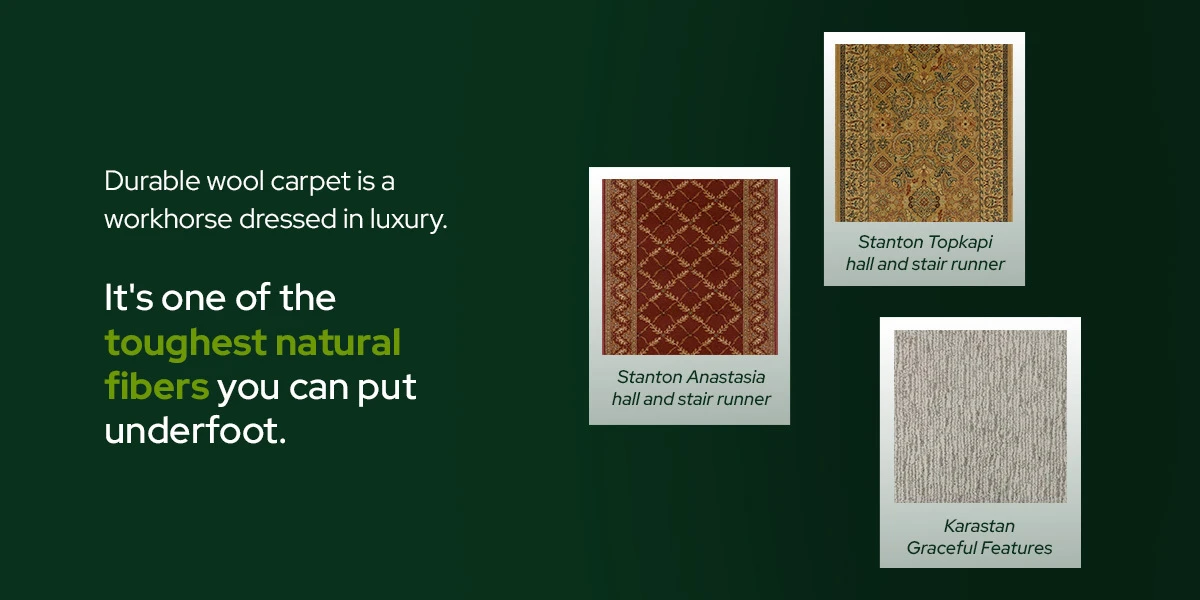
Durable wool carpet is a workhorse dressed in luxury. It's one of the toughest natural fibers you can put underfoot. Wool's natural crimp lets each strand spring right back into shape after foot traffic or heavy furniture presses it down, resisting the matting and flattening that make cheaper carpets look worn within a few years. That resilience translates into fewer replacements and fewer disruptions. Competitive in-store pricing makes long-lasting wool more accessible than most homeowners expect.
Natural Fire Resistance
Wool carpet packs a genuine safety advantage into every strand — it requires far higher heat to ignite than most synthetic fibers. Wool ignites at 1,058° Fahrenheit to 1,112° Fahrenheit, compared to 491° Fahrenheit for cotton and 905° Fahrenheit to 1,040° Fahrenheit for polyester, and it self-extinguishes rather than melting or dripping once removed from a flame. That kind of protection comes standard in the fiber, a quiet but meaningful win for households with kids.
Hypoallergenic Properties
Wool rarely triggers allergies. In fact, it's naturally hypoallergenic for most households. Its dry fibers are naturally resistant to dust mites, mold and bacteria. Instead of releasing airborne particles, as some carpets do, wool traps them within the fiber.
For a deeper look, check out this hypoallergenic carpet guide. The one exception is anyone with a known wool or lanolin allergy — wool isn't the right fit there.
Superior Insulation
Wool carpet doubles as a natural insulator, keeping rooms warmer in winter and cooler in summer. Research shows wool carpets can reduce heating and cooling costs by 8%-13%, and those energy savings quietly help offset wool's higher up-front cost over time.
The fiber also regulates humidity on its own, absorbing moisture from the air when it's damp and releasing it when conditions dry out. Wool can absorb up to 30% of its weight in moisture vapor without ever feeling wet underfoot.
Cons of Wool Carpet
No material is perfect, and the disadvantages of wool carpet deserve just as much attention as the perks. None of these are dealbreakers on their own — they're simply what it takes to know if wool is the right match for your home.
Higher Up-Front Cost
Wool carpet costs more than most synthetic options. Material costs typically run $3 to $21 per square foot, generally landing higher than nylon, polyester or olefin. Price is the single biggest reason homeowners hesitate on wool. But factor in wool's durability and lifespan, and the cost per year of ownership often swings back in wool's favor, especially with an in-store 150% price-match guarantee backing you up.
Moisture Sensitivity and Mildew Risk
Wool absorbs water more readily than synthetic fibers and takes noticeably longer to dry. If moisture lingers too long, mildew can take hold within the fibers, which makes wool a poor match for bathrooms, entryways, basements or any space that deals with frequent spills or wet feet. A knowledgeable flooring expert can help match wool to the right rooms, like bedrooms, living rooms, home offices and studies, while steering you toward better options for high-moisture areas.
Initial Shedding
New wool carpet often sheds for the first few weeks, and that's completely normal. It's just short fibers left over from manufacturing that are working their way to the surface, and regular vacuuming clears them up within a few months.
You might also notice sprouting, single tufts poking up above the pile, which you should clip rather than pull. For a full breakdown of the post-installation timeline, see this page on what to expect after installation.
Specialized Cleaning Requirements
Wool carpet plays by its own rules when it comes to cleaning. Standard household cleaners are off the table. Bleach and other high-alkaline products can permanently damage the fiber, hardening it, stripping color and in severe cases breaking it down entirely.
Wool needs pH-neutral products and periodic professional cleaning to stay in good shape. It's a lifestyle commitment worth knowing before you buy, and a knowledgeable flooring team can walk you through the right care routine at the point of purchase.
Frequently Asked Questions About Wool Carpet
Here's what most homeowners want to know about wool carpet.
Is Wool Carpet Worth the Investment?
Yes, for the right household. Wool carpet earns its keep for homeowners planning to stay in their homes long-term and who want a durable, natural flooring option that can last for decades. If budget is the deciding factor, a wool blend offers a solid middle ground.
Is Wool Blend Carpet a Good Option?
Yes, particularly for budget-conscious buyers. Looking at wool blend carpet pros and cons side by side, the blend often makes the most sense of the two options. A wool-nylon blend captures most of wool's benefits — resilience, insulation and a natural feel — at a lower price point, and independent testing shows it can perform equally well as 100% wool in high-traffic areas. Seeing pure wool and wool-blend samples side by side in a showroom makes the difference easy to feel.
Is Wool Carpet Good for Allergies?
Yes, for most people. The one caveat still applies for anyone with a known wool or lanolin allergy — see the hypoallergenic carpet guide for the full picture.
How Long Does Wool Carpet Last?
Wool carpet often lasts far longer than typical options. Quality wool carpet can last 20 to 25 years with proper care, compared to roughly 5 to 15 years for many synthetic alternatives. That extended lifespan means fewer replacements and less hassle over time, and most installations come backed by a 2-year installation warranty.
Find Your Perfect Carpet at Carpet & Tile Mart
You now know what makes wool carpet special, and where it asks for a little extra commitment. That's the kind of decision Carpet & Tile Mart wants you to make with real answers.
Our 14 locations across Delaware, Pennsylvania and South Jersey let you touch, feel and walk on wool carpet before you buy, with flooring experts who know the material inside and out. Once you've found the right fit, our professional carpet installation team can often have new floors installed within a week, backed by an in-store 150% price-match guarantee.
Visit a store near you to explore in person, or browse our carpet selection online.